


Last adaptation to the version: 2.14 (02.2026)
- Neuer Reiter Protokolle, welcher die vorherigen Reiter Operationen Log und Cloud Scheduler zusammenführt
- Neue Schaltfläche Sortieren
Requirements
- Hardware and VM: At least version 12.2 is required, and a current license must also be available.
- A user account from the Reseller Portal is required.
In order to also be able to make changes, it is necessary to link the user access when logging into the Unified Security Portal for the first time.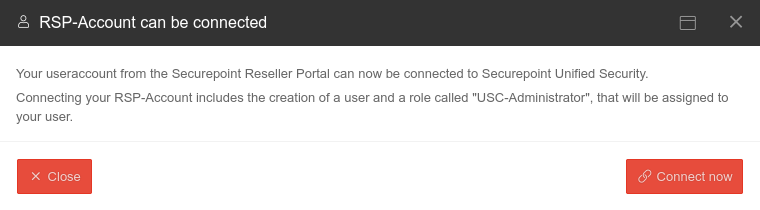
- The license must be clearly assignable to a UTM
- Cluster licenses must be reloaded from the reseller portal and assigned separately to the master or spare so that they are unique in the USC.
- The UTM must have access via https to the Unified Security infrastructure

(Exception: The function Security Scan)
No connection is established from outside to the UTM
The UTM logs itself into the Unified Security Portal and retrieves configuration changes and commands.
The settings in the portal are therefore not executed in real time, but with a small delay.
- The following wiki article describes licence migration from Terra Cloud to Securepoint
Preparations
Settings and authorizations of the UTM for the Unified Security Console
|
notempty
Note for cluster licenses In order for both cluster members to be assigned to each other, special new licenses must be registered on both devices. Menu Button To do this, two licenses must be downloaded from the reseller portal. If no license is marked as xynnnnn-SPARE in the reseller portal (matching licenses have an identical color marking on the left side of the table), please send an email to lizenzen@securepoint.de with customer name, customer number and the serial numbers of the devices or, in the case of VMs, with the license ID. Access by then Unified Security Console must first be enabled in the UTM itself in the menu . notempty
Attention: It usually takes a few minutes, in unfavorable cases up to an hour, before the menu is displayed for the first time. The process can be shortened by executing the command on the CLI after a few minutes of runtime (the UTM must have had the opportunity to report to the license server!). system restrictions update |
UTMuser@firewall.name.fqdn 
| ||
| Caption | Value | Description |  |
|---|---|---|---|
| Privacy Policy: | Yes | The privacy policy must be accepted | |
| Activated: | Yes | This activates the Unified Security Console - and thus the display, configuration and access via the Securepoint Unified Security portal. | |
| Authentication method: | Authentication method for a web session | ||
| PIN: | •••••••• | As authentication for a web session, a 6-digit PIN can be selected instead of the login mask with access data.
| |
| Displays the Websession PIN | |||
| Creates a new PIN | |||
| The entered PIN is incorrect | After 5 (default value value can be changed in the CLI with the extc variable SESSIONAUTH_MAXRETRY extc value set application ‘spcloudpuppet’ variable ‘SESSIONAUTH_MAXRETRY’ value ‘5’ The PIN can be unblocked again when logging in to the UTM itself. | ||
Actions that can only be executed with a PIN:
| |||
Detailed authorizations
| On the UTM under Authorizations, the authorizations of the Unified Security Console for the UTM can be activated On or deactivated Off in detail: | ||
| USC authorization | Description |  USC authorizations
|
|---|---|---|
| Status | Allow insight into system and memory utilization via the USC | |
| PIN-protected actions | Allow PIN-protected actions from the USC. These include:
| |
| One-time update | Allow configuration of one-off updates from the USC | |
| Websession | Allow opening a web session to access the UTM configuration interface from the USC | |
| Security Scan | Security Scan zur Aufdeckung von Fehlkonfigurationen aus der USC zulassen | |
| UTM profiles | Allow the use of UTM profiles from the USC. Can be configured more precisely using the following authorizations: | |
| Open | This icon next to UTM-Profile displays the individual UTM profiles tabs, which can then be activated On or deactivated Off
| |
| Cloud-Backup | Allow configuration of cloud backups via the USC | |
| Systemmeldungen | Festlegung des Empfängers von Systemmeldungen über die USC zulassen | |
| DNS-Server | Konfiguration der externen DNS-Server über die USC zulassen | |
| Zeit-Einstellungen | Einstellung von NTP-Server und Zeitzone über die USC zulassen | |
| Administration | Allow aconfiguration of dministrative access via the USC Host name, IP addresses or networks from which the admin station interface of the UTM may be accessed. Configuration on the UTM in the menu Area Adminstration | |
| Systemweite GeoIP Sperrungen | Blockierung von IPs auf Länderbasis über die USC zulassen | |
| Firmware-Updates | Konfiguration von regelmäßigen automatischen Updates über die USC zulassen | |
| TIF (Cyber Defense Cloud) | IP-Zugriffe auf potentiell gefährliche Gegenstelle protokollieren oder blocken über die USC zulassen | |
| Data protection | Allow configuration of the anonymization of UTM applications via the USC | |
| Fail2Ban | Allow configuration of Fail2Ban via the USC | |
| Cloud Shield | Allow configuration of Cloud Shield via the USC | |
Deletes the local Cloud Shield configuration The configuration is normally carried out via the USC to ensure synchronization and should only be carried out here in exceptional cases. If Cloud Shield is to be reactivated, it must be ensured that the authorization is set on the UTM side. A new transfer of the configuration to the UTM must then be triggered in the USC by changing the Cloud Shield or UTM profile. | ||
| VPN configuration (ASC) | Allow the use of VPN configuration profiles from the USC | |
| All VPN configurations for this UTM can be deleted using this button | ||
USC in the portal


Call USC
| The Unified Security Console is accessed via the Securepoint Unified Security Portal at https://portal.securepoint.cloud Clicking on the device tile opens the device details. |
 | ||
Securepoint recommends assigning a unique name according to a clear structure. | |||
General Options
| |||
| Filters the display | |||
| Sortieren |
Per Klick auf diese Schaltfläche öffnet sich ein Menü, indem nach bestimmten Kriterien die Kacheln sortiert werden können | ||
| Name | |||
| Cluster / Name | |||
| Tags | |||
| Displays the search results alphabetically ascending/descending | |||
| / List view / Grid view | Switch between list and grid view | ||
| Refresh | Refresh the display | ||
Status Overview
Show status in tile overview:
| Icon | Hovertext | Description |
|---|---|---|
| Connected | The UTM can reach the USC portal | |
| Disconnected | The portal does not receive a message from the UTM | |
| USR active | Unified Security Report is configured and is sent out | |
| VPN | The UTM is located in the VPN configuration (Adaptive Secure Connect ASC) | |
| Cloud Shield | Cloud Shield is configured for the UTM | |
| a1b2 | Cluster a1b2 | Device belongs to a cluster license. The ID can be used to clearly identify cluster licenses that belong together. The hex number corresponds to the first 4 digits of the license_cluster_id, which can be found with the CLI command system info |
| Update available | There is an update on the UTM that can be installed
Displayed in the device tile for Version | |
| Update highly recommended! | There is a security update that should be installed immediately!
Displayed in the device tile for Version | |
Detail display

The detail display provides an overview of the most important states and messages for the UTM:
- Hardware and software of the UTM
- Messages from the Unified Security Report (if this option has been booked in the Reseller Portal)
- An overview with information about the hardware status:
- Memory usage
- CPU utilization
- Hard disk space used
- Details on upgrade / rollback options
- Display of the device location on a map (manual collection, no tracking)
- License information
- Information from the reseller portal about the company assigned to the license
Operations Operations | |||||||||||||||
| Device | |||||||||||||||
| Action | Description | 
| |||||||||||||
|---|---|---|---|---|---|---|---|---|---|---|---|---|---|---|---|
| Reboot PIN recommended | Performs a restart of the UTM | ||||||||||||||
| Shut down PIN recommended | Shuts down the UTM | ||||||||||||||
| Firmware | |||||||||||||||
| Restore factory settings PIN recommended | Restores the factory settings | ||||||||||||||
| Rollback to version 12.x.y PIN recommended notempty New as of UTM Version 14.1.0 |
Performs a rollback to the previously installed version. If USC is active, the PIN is requested. | ||||||||||||||
| Plan a one-time update | A one-time firmware update can be planned
Einmalige Updates über die USC lassen sich auf der UTM verbieten im Menü Area USC Permissions Eintrag Einmaliges Update Spalte Aktivieren Schaltfläche Nein Regular updates can be configured in the UTM profiles. This Wiki article describes this configuration | ||||||||||||||
| Remember PIN for the current session Available in Restart Shut down Restore factory settings |
In this dialogue window it is possible to remember the PIN for this session. If this is activated , the PIN is automatically entered in other dialogues and the slider is no longer displayed. If the PIN is entered incorrectly, it will not be saved. | ||||||||||||||
Cluster Cluster | |||||||||||||||
| Information on the cluster: Cluster-UUID, Status, Cluster-Version (Firmware version of the cluster partner), Synchronization status und License serial number Click on Go to other cluster UTM to go to the other cluster partner. In order for both cluster members to be assigned to each other, special new licenses must be registered on both devices. Menu Button To do this, two licenses must be downloaded from the reseller portal. If no license is marked as xynnnnn-SPARE in the reseller portal (matching licenses have an identical color marking on the left side of the table), please send an email to lizenzen@securepoint.de with customer name, customer number and the serial numbers of the devices or, in the case of VMs, with the license ID. |
 | ||||||||||||||
Websession Websession | |||||||||||||||
| Start new websession | Opens the dialog to start the administrative web interface of the UTM |  | |||||||||||||
Websession with PINnotempty The connection is established via the interface on which the default route of the UTM is set up.
Websession with PIN (UTM from v12.5.1) | |||||||||||||||
| admin | If there is no user with the name admin, a user with admin rights can be selected here with whom the Websession connection is to be started. |  Websession with PIN (UTM as of v12.5.1)
| |||||||||||||
| _ _ _ _ _ _ | Websession PIN (Configured on the UTM in the menu in the Unified Security Console section After entering the PIN, the Websession can be started directly using ↵ Enter. | ||||||||||||||
notempty Displays the Websession PIN
New as of: 1.27 | |||||||||||||||
| Remember PIN for the current session notempty New as of 1.30 |
In this dialogue window it is possible to remember the PIN for this session. If this is activated , the PIN is automatically entered in other dialogues and the slider is no longer displayed. If the PIN is entered incorrectly, it will not be saved. | ||||||||||||||
| The entered PIN is incorrect | After 5 (default value value can be changed in the CLI with the extc variable SESSIONAUTH_MAXRETRY extc value set application ‘spcloudpuppet’ variable ‘SESSIONAUTH_MAXRETRY’ value ‘5’ The PIN can be unblocked again when logging in to the UTM itself. | ||||||||||||||
| Start new websession | Opens the admin interface of the UTM in a new tab of the used browser | ||||||||||||||
Websession with login screennotempty
Websession with login screen (UTM from v12.5.1) | |||||||||||||||
| The connection is established via the interface on which the default route of the UTM is set up. |  Websession with login screen (as of UTM v12.5.1)
| ||||||||||||||
| As the Websession PIN is deactivated, no automatic login can take place. Access data (user name and password) are required. | |||||||||||||||
| Start new websession | Opens the admin interface of the UTM in a new tab of the used browser | ||||||||||||||
Websession with UTM up to v12.5.0notempty
An update to the latest version is recommended
| |||||||||||||||
Cloud backup Cloud backup | |||||||||||||||
Indication of the following values:
|
 | ||||||||||||||
| Download | Downloads the backup locally | ||||||||||||||
| Restore PIN recommended | Restores the selected configuration. In the configuration management in the admin interface of the UTM, this can then be set as the active or start configuration. | ||||||||||||||
| Delete | Deletes the configuration backup | ||||||||||||||
| Operations | |||||||||||||||
| Opens a dialog for creating a new password | |||||||||||||||
| Creates a configuration backup | |||||||||||||||
Protokolle Protokolle | |||||||||||||||
| Log of the communication between UTM and the Unified Security infrastructure | |||||||||||||||
Operationen LogOperationen Lognotempty
New as of: 2.14 | |||||||||||||||
| Der Status der Operationen zwischen der UTM und der USC | |||||||||||||||
| Time | Shows the date and time at which the job is executed |  | |||||||||||||
| Job | Displays the job that is being executed The displayed job is described in more detail | ||||||||||||||
| Direction | Indicates the direction of communication
| ||||||||||||||
| Status | Displays the status of the executed job
| ||||||||||||||
| Info | Displays further information on the transmitted job. If an error has occurred, the type of error is described here. | ||||||||||||||
| Operations | Operations displayed here can be executed | ||||||||||||||
Profile & VPN LogProfile & VPN Lognotempty
New as of: 2.14 | |||||||||||||||
| The status of the transmitted UTM profiles is also logged here | |||||||||||||||
| Time | Shows the date and time at which the job is executed |  | |||||||||||||
| Job | Displays the job that is being executed The displayed job is described in more detail | ||||||||||||||
| Direction | Indicates the direction of communication
| ||||||||||||||
| Status | Displays the status of the executed job
| ||||||||||||||
| Info | Displays further information on the transmitted job. If an error has occurred, the type of error is described here. | ||||||||||||||
| Operations | Operations displayed here can be executed | ||||||||||||||
Cloud Scheduler LogCloud Scheduler Log | |||||||||||||||
| Der Status der automatisch heruntergeladenen Updates der UTM | |||||||||||||||
| Ausführzeit | Zeigt das Datum und die Uhrzeit an, indem das Profil ausgeführt wurde |  | |||||||||||||
| Profile | Displays the profiles | ||||||||||||||
| Typ | Zeigt den Typ des Profiles an | ||||||||||||||
| Status | Displays the status of the executed job
| ||||||||||||||
| Operations | Operations displayed here can be executed | ||||||||||||||
Applications Applications | |||||||||||||||
| Shows the status of the applications on the UTM with possible actions. The chart can be sorted by application name or status by clicking on the respective column. | |||||||||||||||
| Status DOWN | The application is not active |  | |||||||||||||
| Status UP | The application is active | ||||||||||||||
| Status N/A | The application is not available on this UTM | ||||||||||||||
| Start | Starts the application | ||||||||||||||
| Restart | Stops the application and performs a restart | ||||||||||||||
| Stop | Stops the application | ||||||||||||||
Status Status | |||||||||||||||
Shows utilization and consumption in the course of time for
|
 | ||||||||||||||
Security Scan Security Scan | |||||||||||||||
| Start new scan | Starts the port scan dialog |   | |||||||||||||
| IP address | 192.0.2.192 Public IP address to be scanned. If multiple interfaces with public IP addresses that can be reached from outside are identified, a separate result can be displayed for each interface. | ||||||||||||||
| Profile Securepoint TOP 100 (TCP) |
Clicking on the profile entry shows the list of ports that are scanned with applications and services that usually use that port. | ||||||||||||||
| Show details | Displays open ports and applications and services that usually use them. | ||||||||||||||
Inventory Inventory | |||||||||||||||
Here you can save information about the device and (for devices with SIM card) the contract:
|
 | ||||||||||||||


Error message / Troubleshooting
| Error | Solution |
|---|---|
| UTM is not displayed in the USC | Check the steps in Requirements and Preparations ( UTMs with expired licenses will be removed after 40 days if there is no ASC configuration)
|